Heritage – Juliet balcony, part 2
Completed work on the Juliet balcony. It has been glued in place outside the bedroom swinging window.
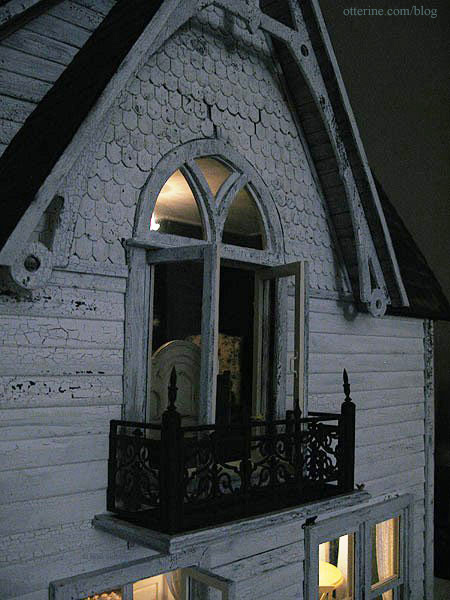
Here’s a reminder of what the basic structure looked like last time.
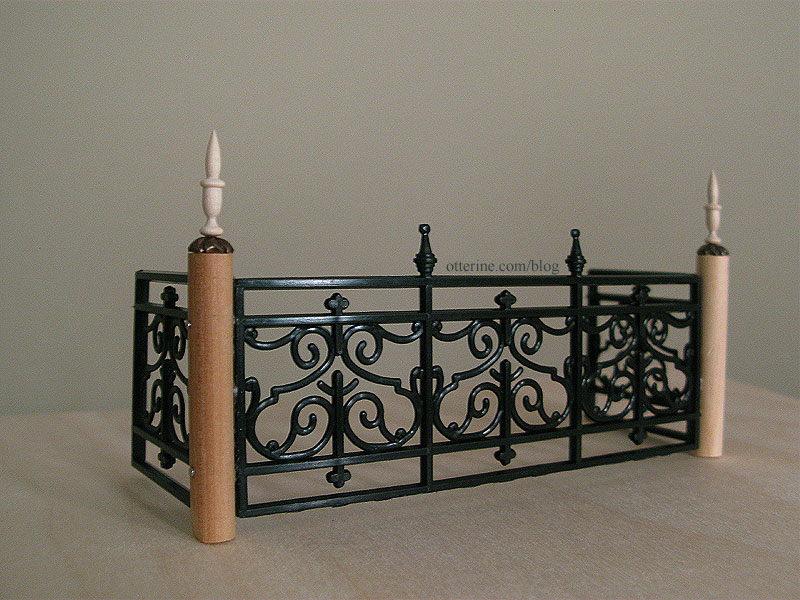
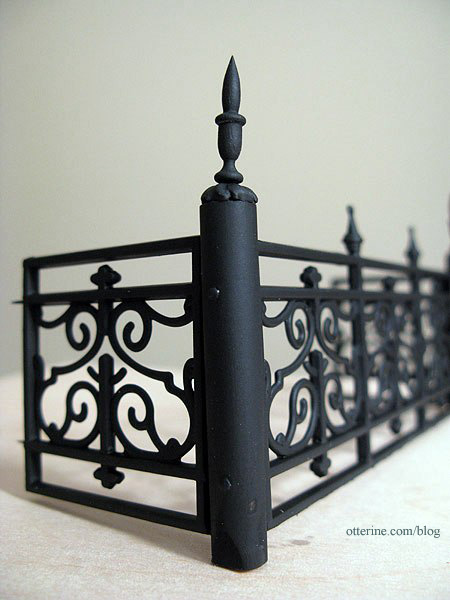
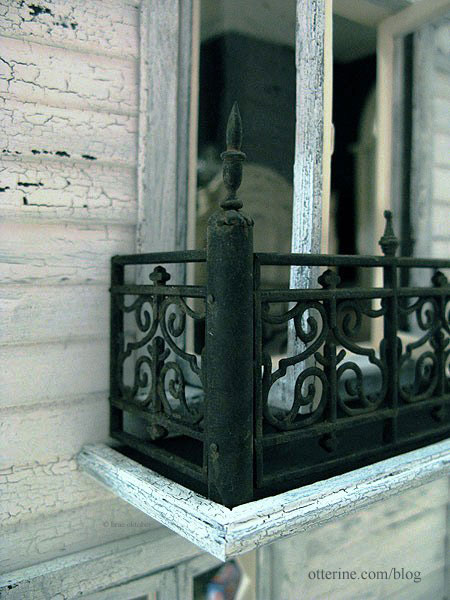
I spray painted the “wrought iron” assembly flat black, which instantly changed the entire look. The finials are a little bent, but I like that for an old house.
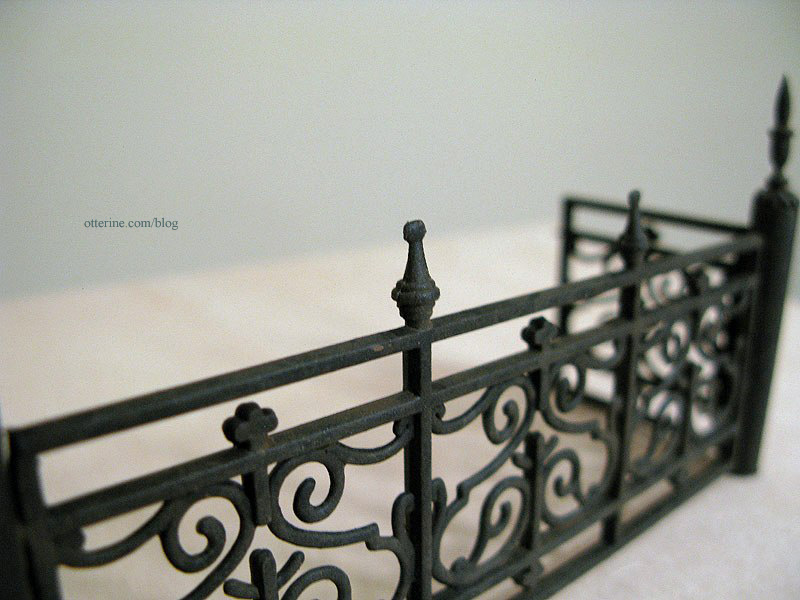
To age the iron, I dabbed on Bittersweet Chocolate by Americana, followed by a light wash of Terra Cotta, also by Americana.
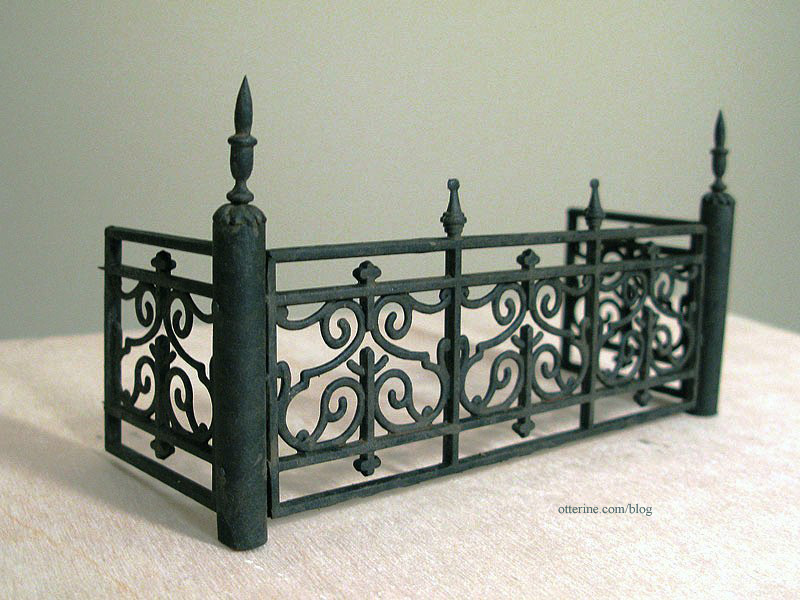
Doesn’t look like plastic anymore.
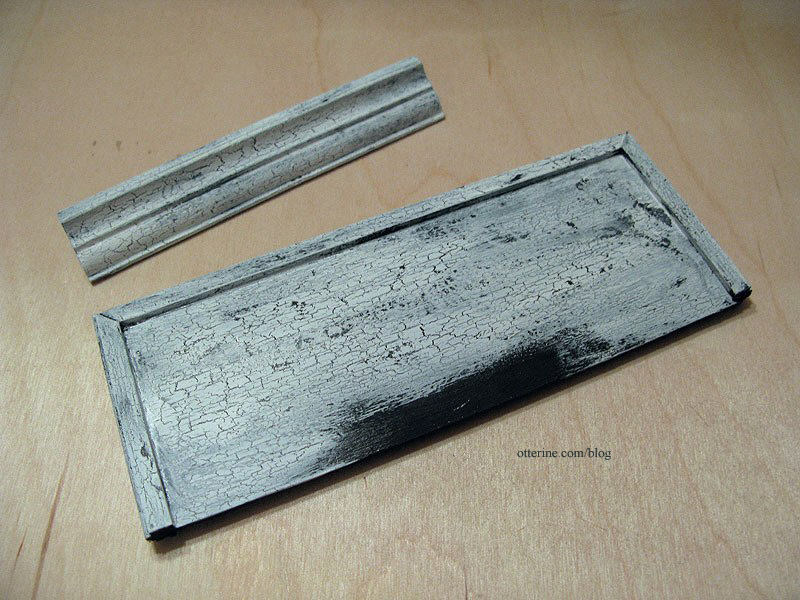
I painted the balcony floor with the charcoal grey mix I had used for the main roof and painted the wood trim and underside plain black. I also painted the support piece black. I crackled white over the wood trim and underside of the balcony as well as the support piece. I added a grey wash to the balcony floor to give the charcoal grey paint some depth and age.
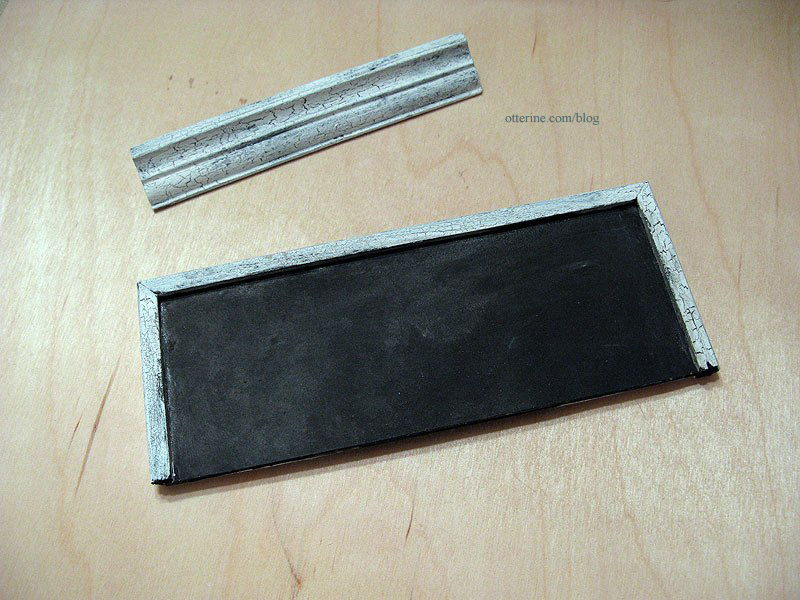
With all these layers of glue and paint, the wood bowed on the bottom of the balcony – a happy accident I couldn’t have planned for if I tried.
I widened the nail holes that attach the balcony railing to the house, careful not to poke through the walls into the bedroom. It wasn’t until after I did this that I realized the balcony was not centered around the window. But, you know what? Maybe the miniature carpenters who built this house didn’t measure twice drill once and just left it. Who am I to argue? 😀
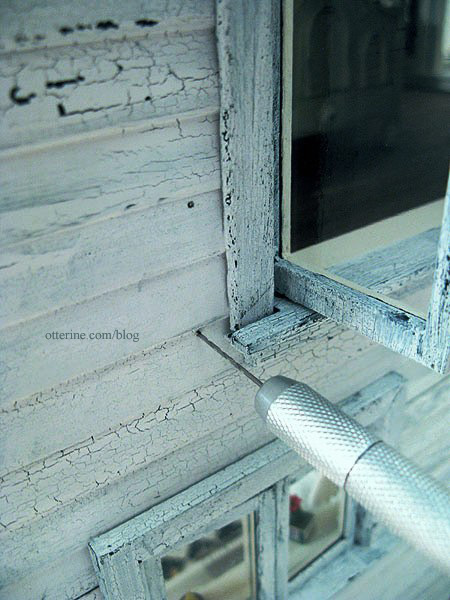
I glued the balcony railing to the balcony floor and then glued the whole balcony to the side of the house. I added the bottom support right away to keep the balcony from falling off the house. :O
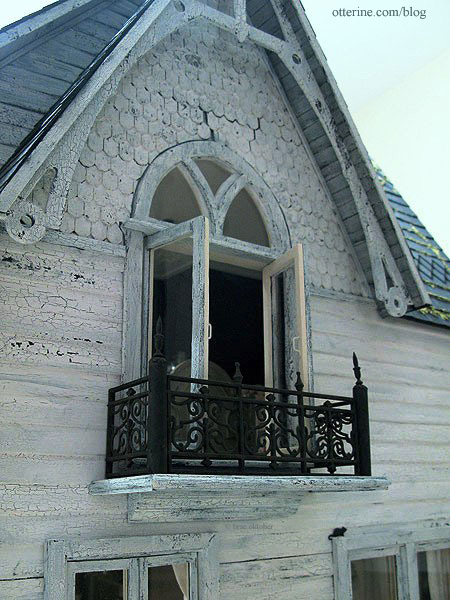
Love this rickety old balcony!
Ophelia couldn’t care less about chasing birds. How beneath her. But, she’ll sit and watch them. 😀
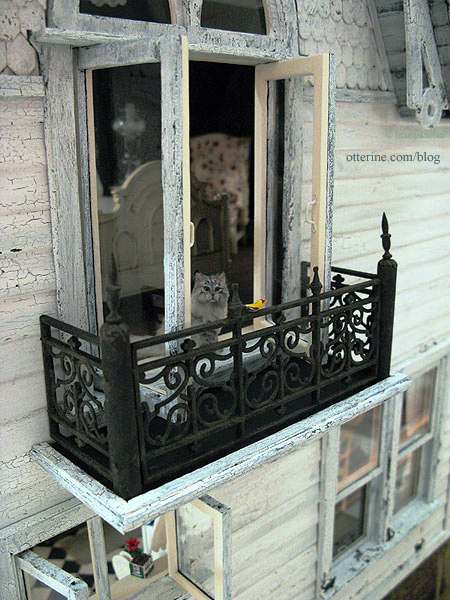
Or, she’ll just enjoy the fresh air and beautiful view.
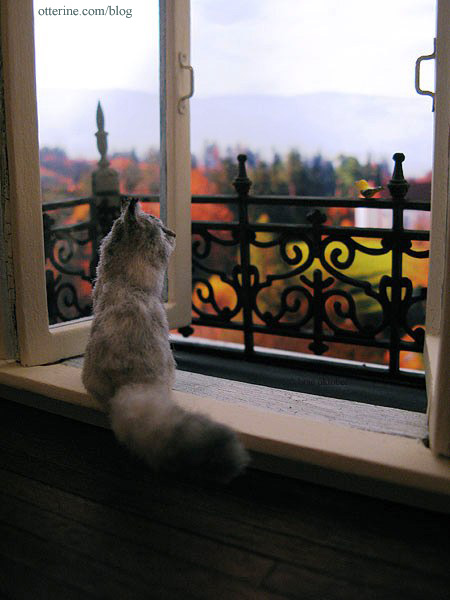
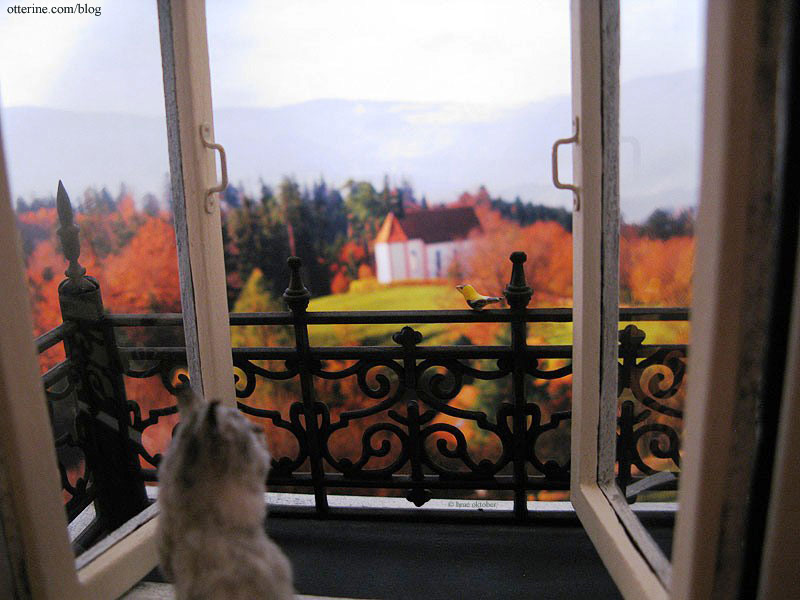
And, grandma won’t risk falling out the window.
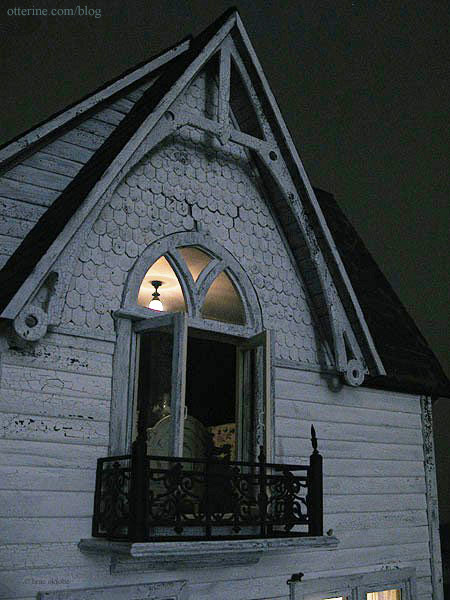
A little later in the evening…
Categories: The Haunted Heritage
March 13, 2013 | 0 commentsThe Artist’s Studio – Skylights
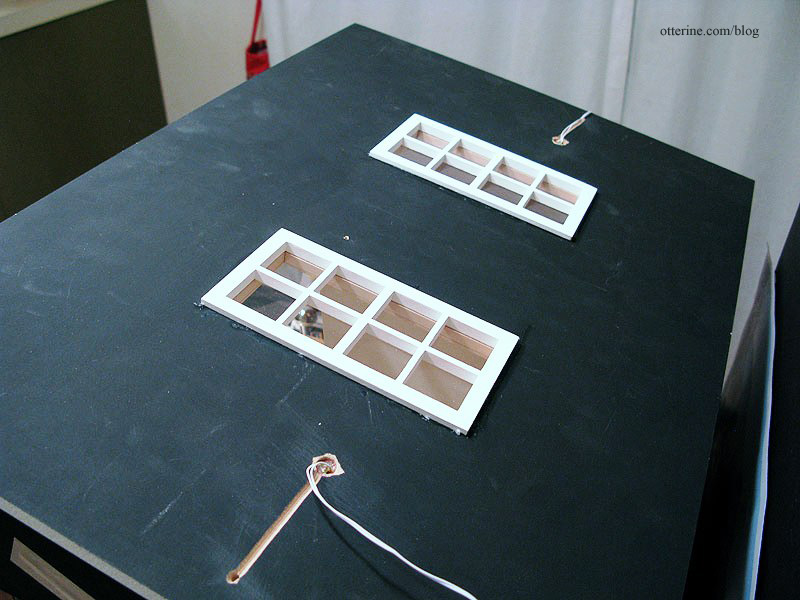
I used two Houseworks 8-light windows for the Studio skylights, though I had to widen the original openings in the ceiling to fit them. I painted the exterior portion Warm White by Americana. I put the board on a towel to keep the painted windows and wood ceiling from being scuffed as I worked.
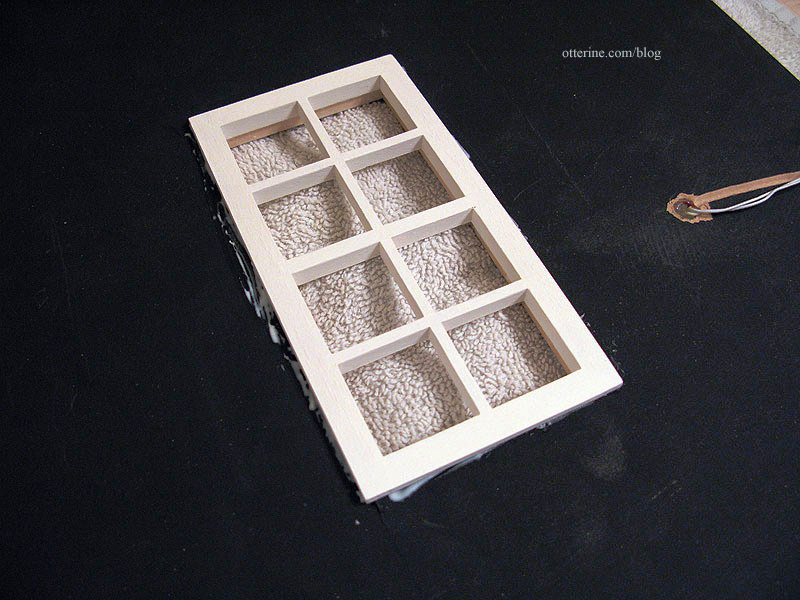
The windows don’t come with window inserts, so I cut inserts from acrylic sheet.
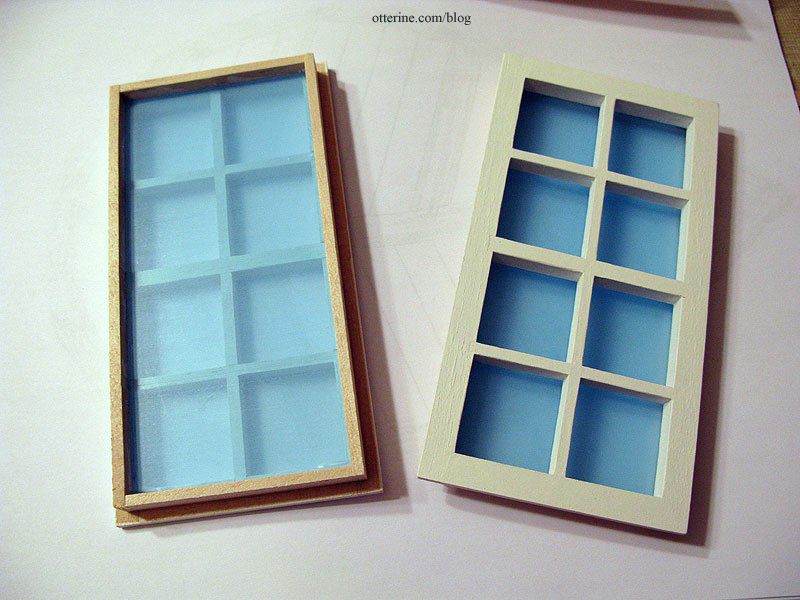
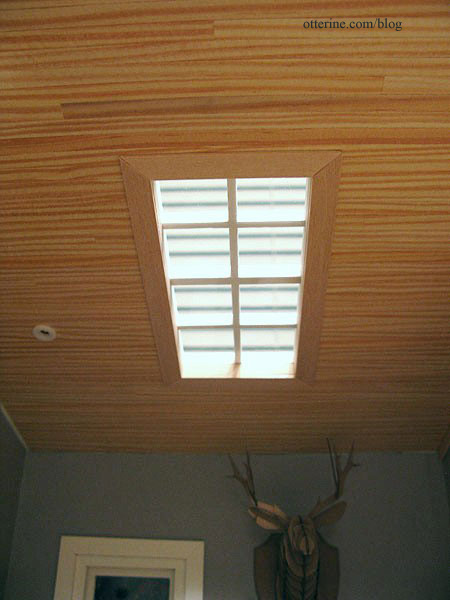
To hold the window insert in place, I framed the interior with strip wood. This was easiest to do before installing the ceiling board permanently. I left it natural to blend with the ceiling treatment. I sanded the wood smooth and sealed with satin varnish before cutting the pieces to fit.
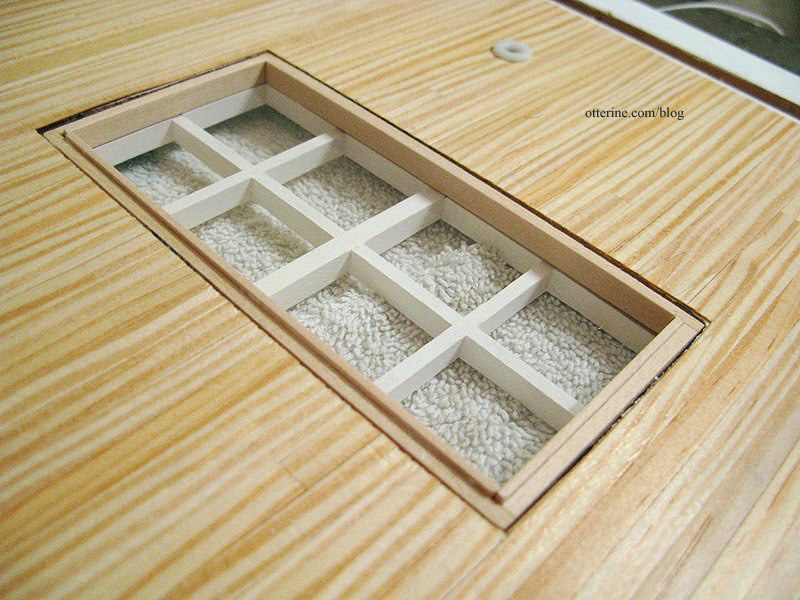
I then added flat trim around the window openings, also natural with satin varnish. I tried to cut them as best as I could with the Easy-Cutter. Being that there is no paint to disguise the slight gaps at the corners, I’ll just have to live with it. I suppose a little wood filler might help…I’ll have to pick some up next time I’m at the hardware store.
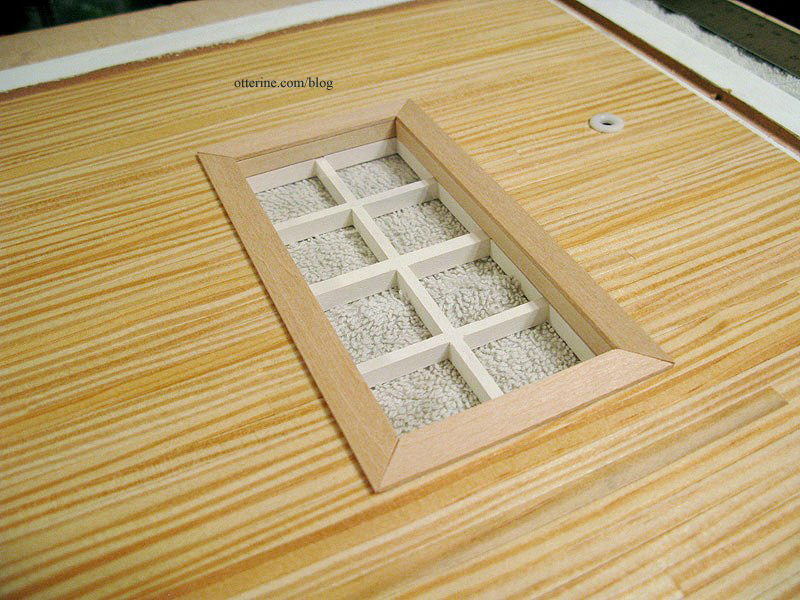
From the outside…
And, from the inside.
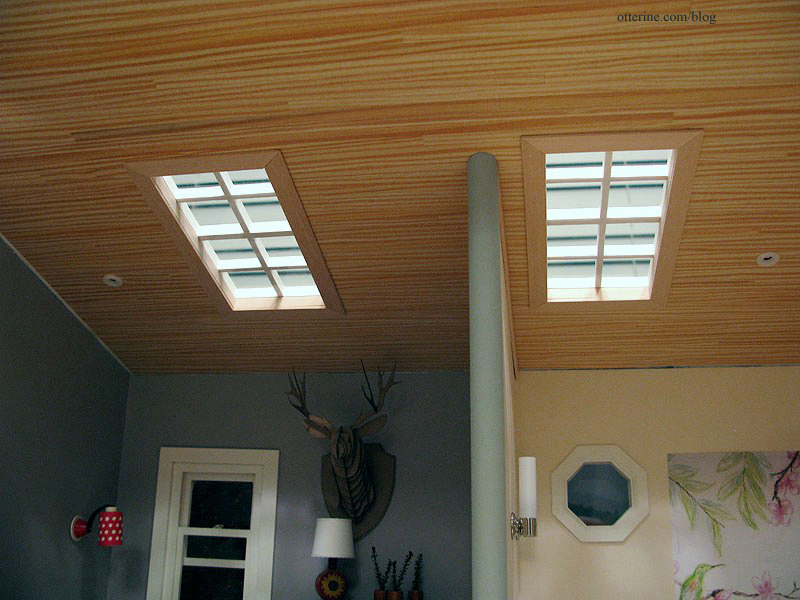
I have the half round trim for the dividing wall cut and painted; the trim that will hide the gap above the wall is also cut and sealed. Neither is installed yet.
Categories: The Artist's Studio
March 12, 2013 | 0 comments1908 Miniature Underwood Typewriter
I received a nice bonus this year, so I decided to spoil myself a little. For some time now, I’ve had my eye on this 1908 Miniature Underwood Typewriter by Ken Byers of Shaker Works West.

It fits wonderfully in grandma’s attic for now, though I foresee this piece making the rounds in my various builds just as Mary’s afghans tend to do.
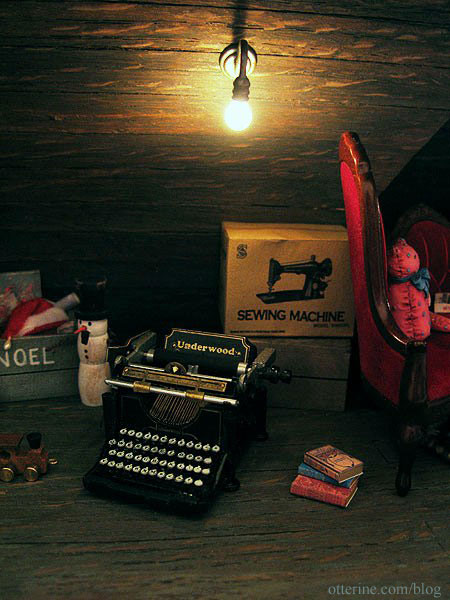
Lots of wonderful minis are making their way to grandma’s attic.
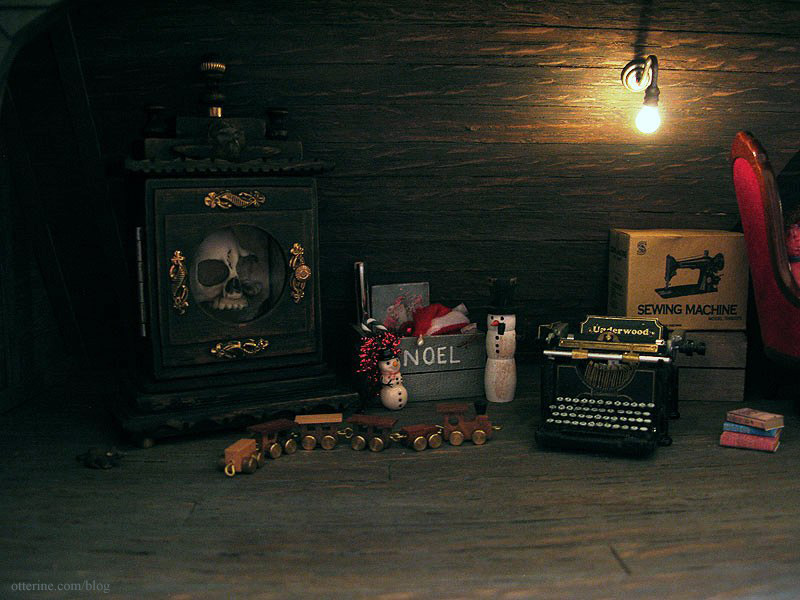
From the left, there is a mouse from Sussex Crafts next to Tony‘s catacombs case clock. The wood and brass train is from a vintage lot of miniatures I bought on craigslist. The Christmas box is from M Carmen for Caterina’s holiday swap. I purchased the two snowmen. The sewing machine box is from Four Little Walls. It’s sitting on a crate with some random books I made in front. :]
In black and white, it looks even more vintage!
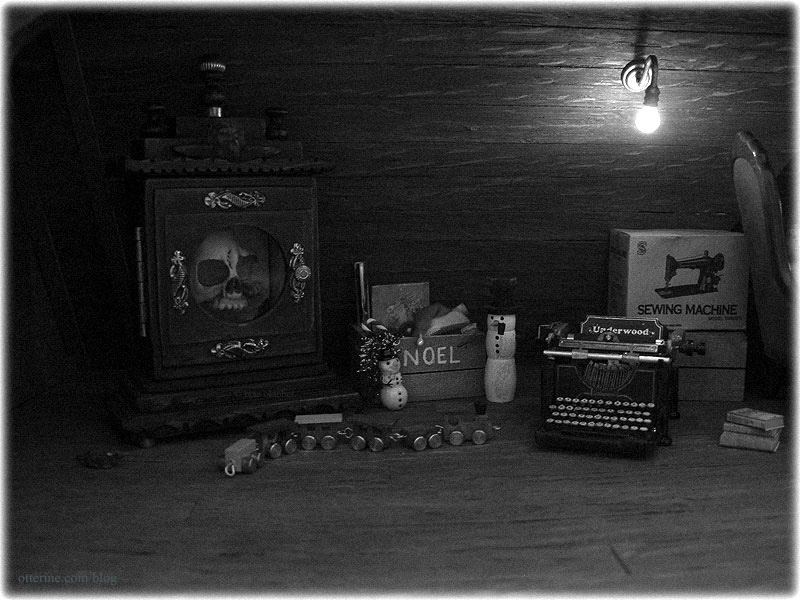
There’s an interesting story about the taller snowman. A week ago, I noticed he was facing backwards. I thought this was odd of me to do, but I just shrugged and turned him around. When I set up this scene, he was facing backwards again!!!! :O Haunted attic indeed! I was seriously disturbed by this because I knew I had turned him around days earlier. Later that day, I was using the scroll saw and something fell out of the Heritage (the saw is attached to the same table). After picking up the wayward mini, I checked the attic and sure enough, that snowman had walked forward! Mystery solved…or was it? Hmm….
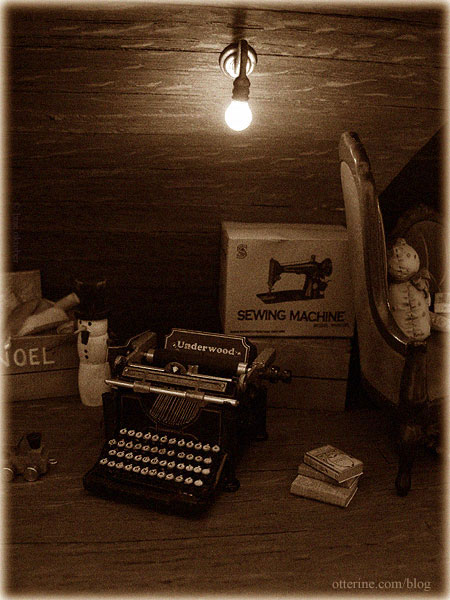
And, have you seen this baby from Uncommon Goods? Nothing like blending vintage and modern! 😀
Categories: Miniatures, The Haunted Heritage
March 11, 2013 | 0 commentsThe Artist’s Studio – Wood stove, part 5
Continuing work on the wood stove. For the stove pipe, I used the wooden dowel that came with the HBS Loft kit. I measured against the outside wall to get the precise angle the pipe would hit the ceiling and used my scroll saw to make the cut. The scroll saw has a nifty angle guide for just these types of cuts.

I tested the fit in the Studio to determine where the pipe would rest on the top of the stove. I made this cut with the scroll saw as well. There’s another guide that can be tightened anywhere along the surface for straight cuts.

Looks like it worked! 😀

Using 1/4″ art tape, I made a lower collar for the pipe. This will add a little visual interest to the top of the stove.


I put cardboard to block the door opening for painting, curling some excess behind the scrap to hold it in place.

I cut another piece for the top. It doesn’t have to be precise since I will paint the interior by hand.

I sprayed all pieces primer grey.

I had attempted to start with an undercoat of flat white, but it didn’t really take. It bled through the grey in some areas, but this is just the first coat of primer anyway. Once this dries, I will do a fine sanding and await another suitable day for spray painting the final color.

I’ve also painted the Chrysnbon radiator for the bathroom. I first sprayed it primer grey and then covered that with Krylon Satin Almond. It’s a not a perfect finish, which is actually pretty great for a radiator. I’ll do a bit more aging once this paint dries, too.

My plan is to have the stove Satin Almond as well. But, if all else fails, there’s always powder-coated black to mask the imperfections!
Categories: The Artist's Studio
March 10, 2013 | 0 commentsThe Artist’s Studio – The Deck, part 3
Continuing work on The Deck. To finish the outer edges of the side deck, I used dark trim wood from my stash. This is definitely Dura-Craft wood, but I am not sure from which kit or if it is walnut (I think it is). It’s close in color to the wood I plan to use for the leaf portions of the deck and using existing materials will keep the cost down.

I love the play of light and dark, and it was such a simple design element. I didn’t trim the main deck yet, since I want to finish the leaf sections first.
The leaves. After a lot of deliberation, I decided to use the same reverse approach I did with the main and side decks. I would form the surface boards first and then work on a supporting framework. Beyond that, I thought developing the walnut outlines and center veins, then cutting the individual boards for the interior portions would be the simplest approach.
I started by redrawing my leaf shapes. My mockup had used rough sketches and cutouts. I used a 5 7/8″ diameter lid, which was close to my original mockup size, to make one end of the leaf.

I marked a point the length of my original mockup (9 1/4″). Digging into my art supplies for a flexible curve, I created a gentle curve first on one side and then the other.

I cut the leaf out and made two more leaves from this one.

I marked the outline 3/8″ inside the outer edge. Since my deck is smaller in proportion to the original and this will be my first major scroll saw endeavor, I kept the center veins soft — just enough to give a sense of movement without overly complicating matters. 😀 They are also 3/8″ wide.

On a new sheet of paper, I measured from the bottom and marked 7/16″ intervals. I was planning on 3/8″ boards for this portion as well, and 7/16″ allows for some room between each plank. I drew lines to make a base guide.

I positioned the leaf template over the lines so there would be a good layout of whole board widths.

I taped the leaf in place and traced the lines onto the template.

I did the same for the other side, varying the angle of the lines.

I darkened the boards that would be walnut, repeated the process for the other two leaves and tested the fit again.

Hooray! 😀

The pencil makes these very messy, so I will make photocopies to work with going forward.

Categories: The Artist's Studio
March 9, 2013 | 0 comments


NOTE: All content on otterine.com is copyrighted and may not be reproduced in part or in whole. It takes a lot of time and effort to write and photograph for my blog. Please ask permission before reproducing any of my content. Please click for copyright notice and Pinterest use.