Hexagon clay tiles, part 1
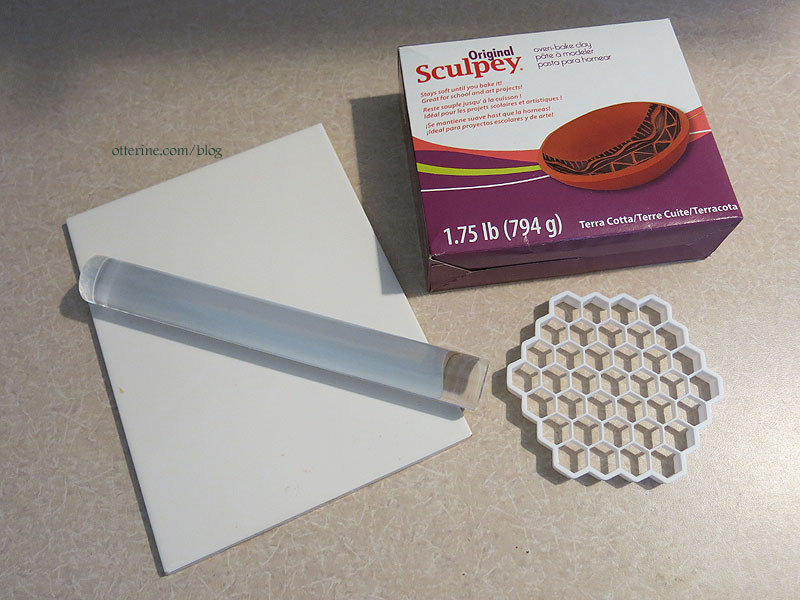
For my project, I envisioned hexagon terracotta tiles. You can buy these already made, but that can add up quickly. I also wanted to see if I could do it myself since I’ve worked with clay before. I bought Original Sculpey in terracotta. I have a ceramic tile working base, roller and cutter I found on eBay. More on the cutter in a moment.
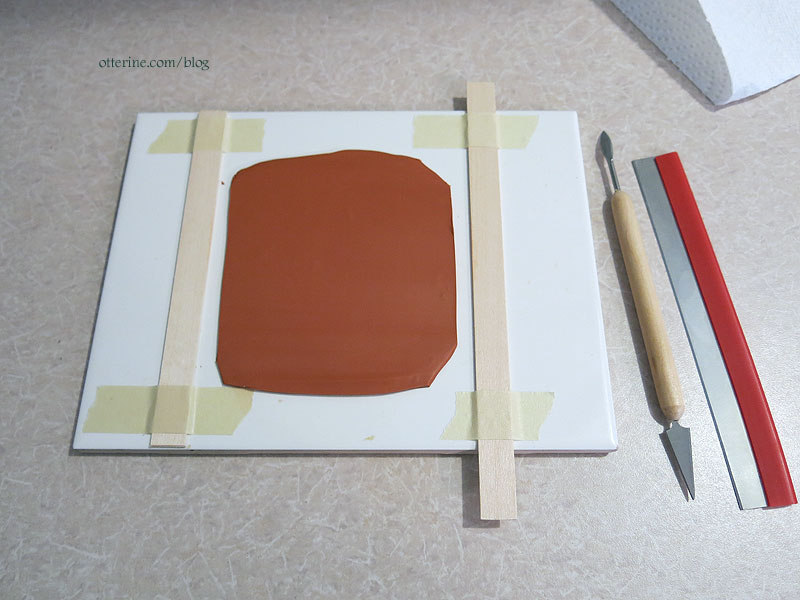
I taped 1/16″ thick basswood strips to the ceramic tile and rolled out the clay. It’s soft and easy to work with. I had to cut away the edges a few times as the clay spread out.
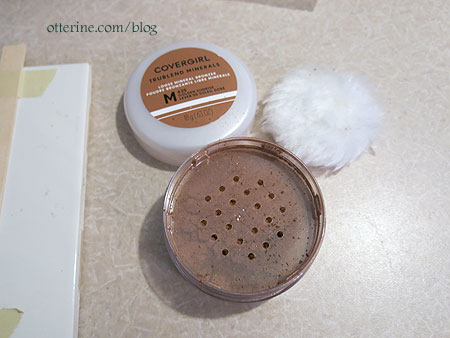
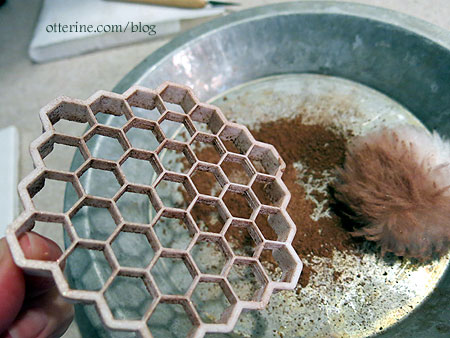
I’m using bronzer (make-up powder) to dust the cutter since I didn’t want white powder contrasting with the color of the tiles. It has some shimmer to it, which is a nice surprise. Very upscale tile made with gold dust. I did get too much bronzer on the first batch, but I was able to tone it down on the subsequent batches. The first batch will be my test sample for grouting and finishing.
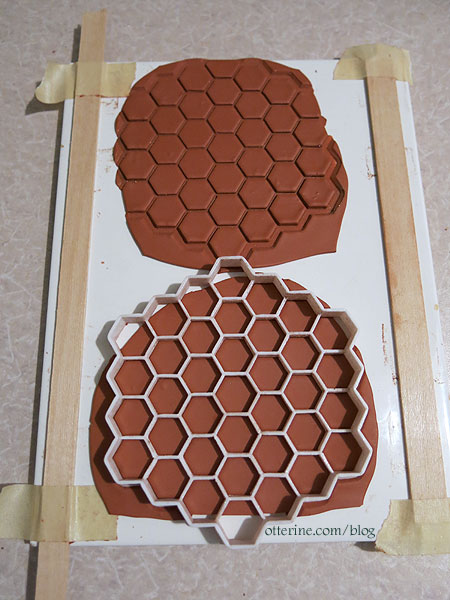
The cutter is designed to cut cookies/biscuits and leave a honeycomb design in the middle, so it has a deeper outer edge than the center pattern.
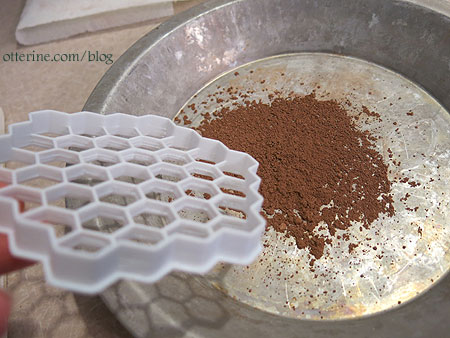
But, the other side is very uniform, so I just used it upside down.
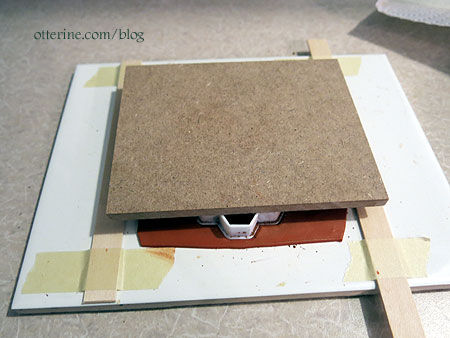
I pressed the cutter into the clay with a board.
I patted the clay with a dry brush to remove some sheen and provide slight texture.
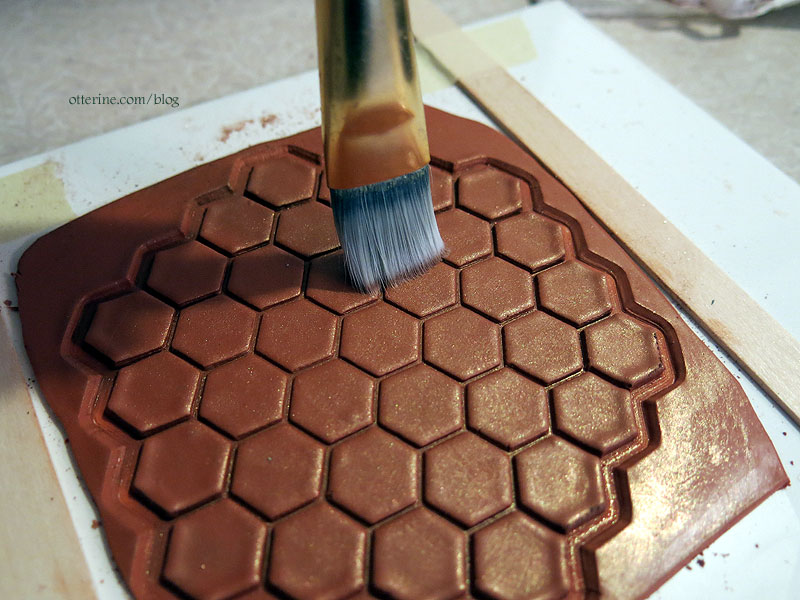
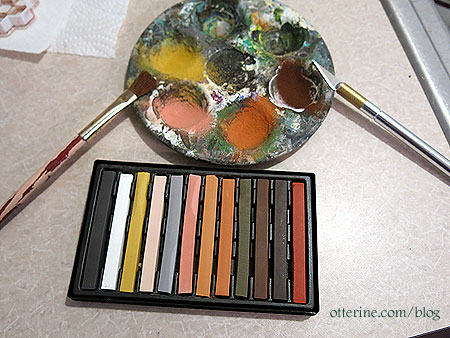
I shaved some pastels into a palette and dry brushed the tiles to vary the coloration. The chalk texture tones down the sheen, too. I used more on the later batches, and it looked better.
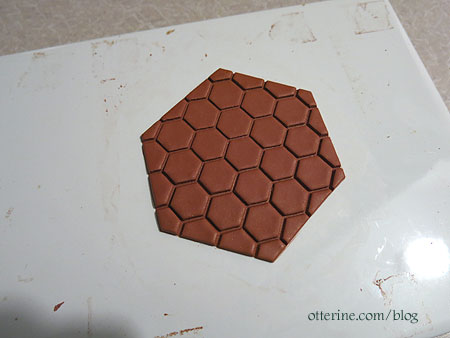
The cutter did not go all the way through, which was fine. The tiles around the edges aren’t usable because of the way the cutter is being used, but the middle ones turned out quite nice. I did cut away a lot of the scrap to reuse, but I baked the remaining shape intact otherwise. I’d rather cut the tiles apart after they bake instead of risking ruining them by cutting them before.
Choosing the baking time is always difficult for small, thin pieces of polymer clay, because you don’t want to burn the clay or end up with brittle pieces. I saw a video where 2mm strips (roughly 1/16 inch – the thickness I am making) were baked for 10 minutes and 60 minutes. The instructions on the clay package indicate baking 15 minutes per 1/4 inch. The video’s 10-minute sample snapped when bent and the 60-minute one was bendy and durable. I am going with 35 minutes to speed things along. After the first batch, I tested the clay after it cooled. It did eventually split when bent, but it took some force. For tiles that will be glued to a board, I called that a success.
I cut away the outer bits and left the main shape intact. I wanted to get a few batches done to see if I could lay them out in these large sections and then piece between them instead of laying tiles out one at a time.
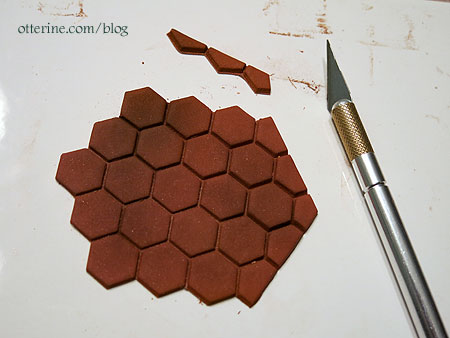
I saved the leftovers since I will have to piece around the edges.
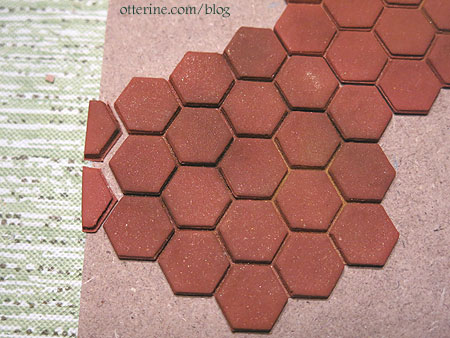
I have a lot to make! :O
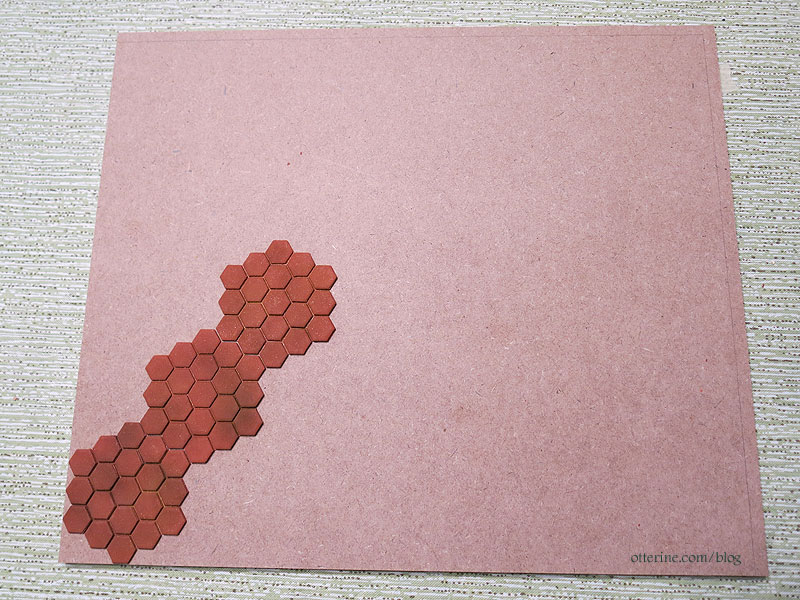
So, I started doing two at a time.
Categories: Polymer clay, Whinnie's Terrace
October 30, 2020 | 0 commentsRatty side door – tetanus shot suggested
In following with the aging of the garage door, I wanted a metal side door that would show its age, perhaps a few dents. The easiest material to use would be plastic. I cut two rectangles of 0.04″ styrene sheet. Using a lighter, I heated up random sections and pressed in with a butter knife to create dents and an awl to create dings.
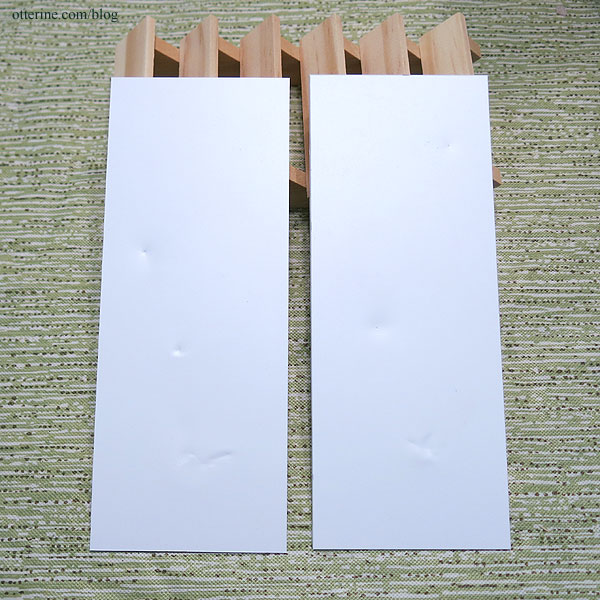
I used 3mm styrene to make an internal structure between the two rectangles to make a hollow door. You can see the scorch marks on the back side from the lighter.
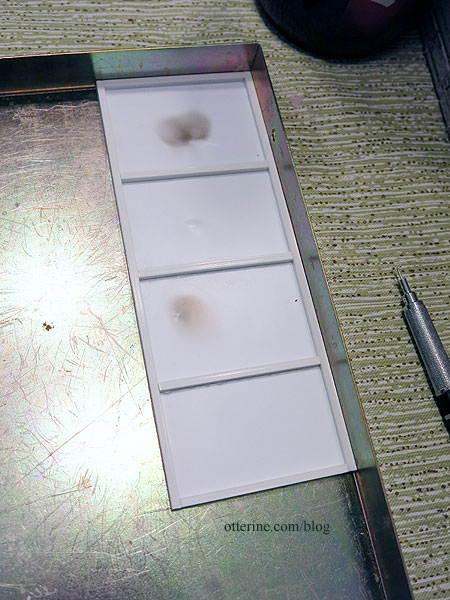
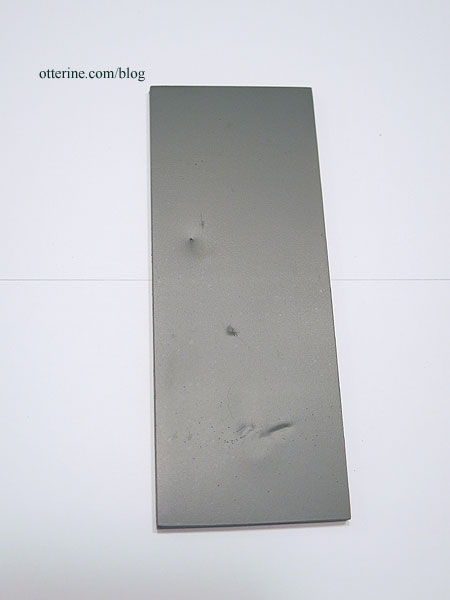
I started with grey primer to grab the plastic. I’m showing the exterior only until the end since it was the same process on both sides.
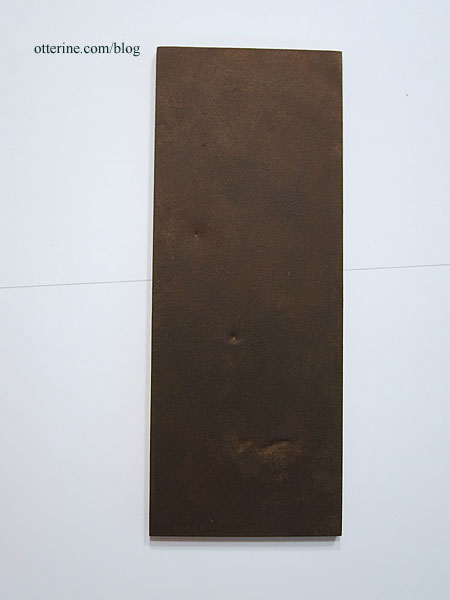
I then painted both sides with acrylic paints to create corrosion.
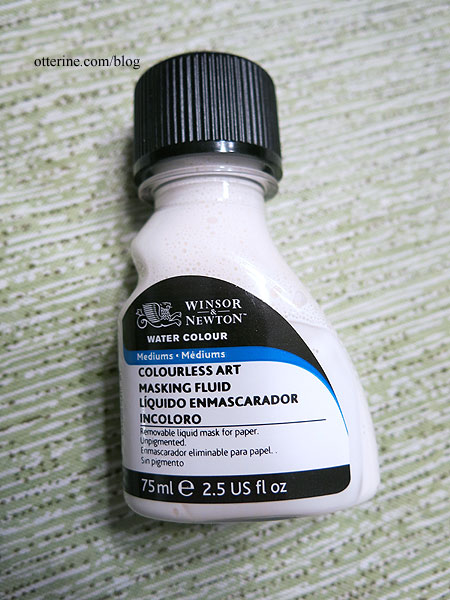
I masked random areas with Winsor & Newton Masking Fluid. This is a pricey fluid used for watercolor painting; it covers any space you want to remain white on a painting.
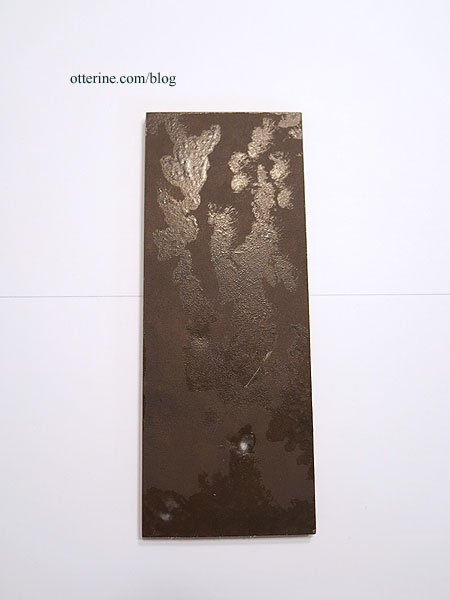
It dries clear, and you paint over it.
I started with gloss Cherry Red by Krylon. I used an eraser to lift the rubbery masking after the paint dried.
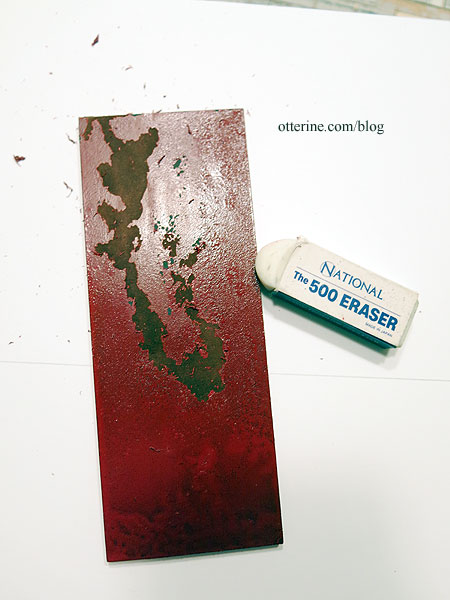
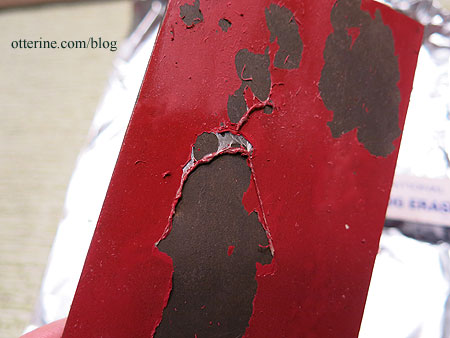
Since the paint was dry to the touch but not yet cured, it also marred the gloss finish — an added bonus. No new paint on this old door.
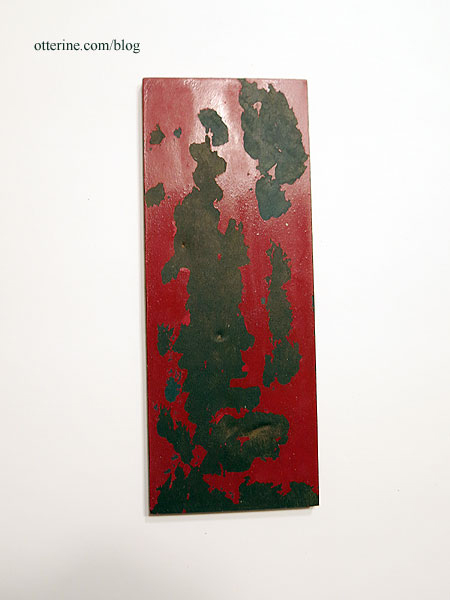
I applied masking fluid again, following the initial patterns loosely.
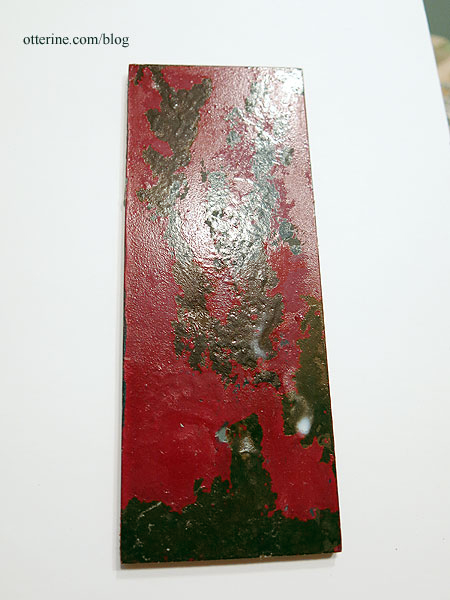
The next color was Rust-Oleum Deep Forest in satin finish, which has a lot of blue tones to it.
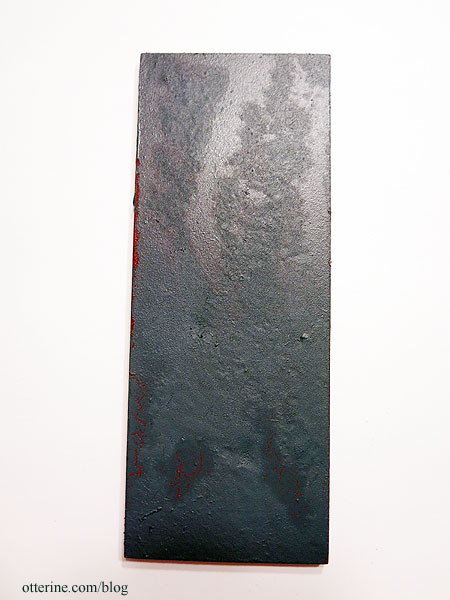
Removing masking…and you can see the red and corrosion underneath.
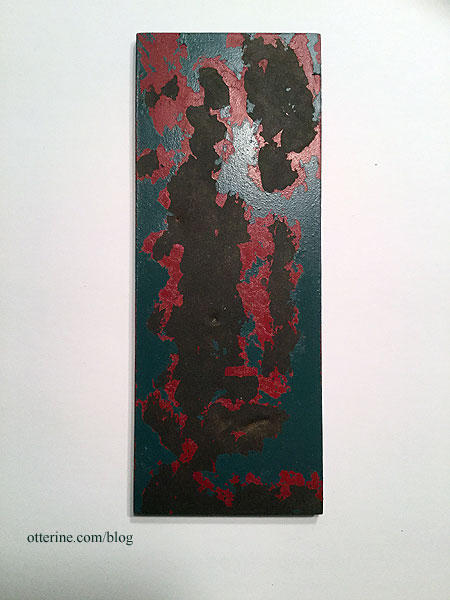
Racing Green by Tamiya was the next color, then final masking. The white portions are where the masking fluid is still drying.
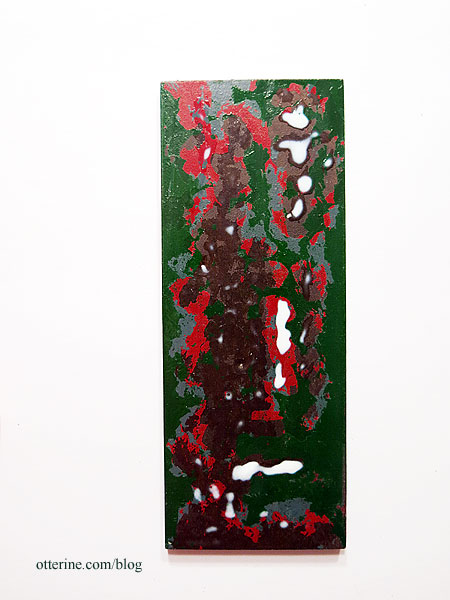
This last time, some of the paint lifted to the grey primer. I used acrylic paints to reapply the corrosion layer over the grey primer areas and to dirty the bottom and lead edge where hands would be constantly touching the door.
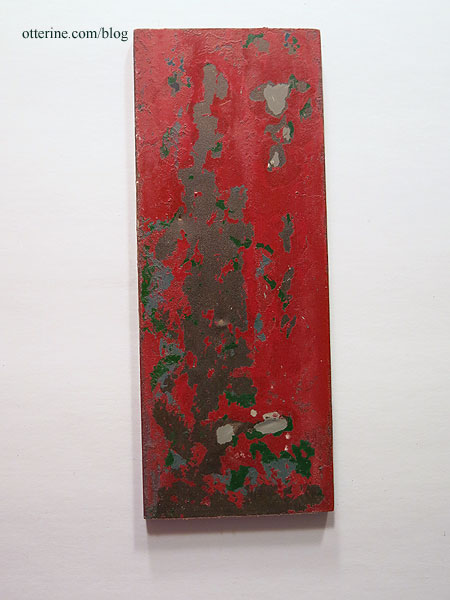
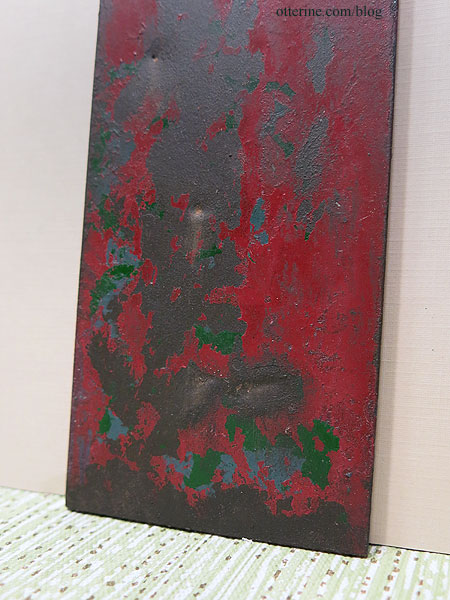
I was originally going to go with a grey door, but how boring. haaaaaa! The exterior was finished with gloss Cherry Red by Krylon since I liked how it “aged” the first time around. I barely waited for the paint to dry this time before attacking the finish and removing the masking. I wanted a truly battered door. :D
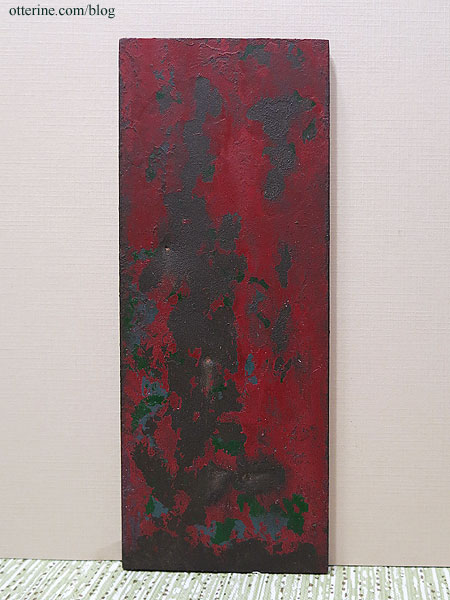
I love the way the dents and dings turned out.
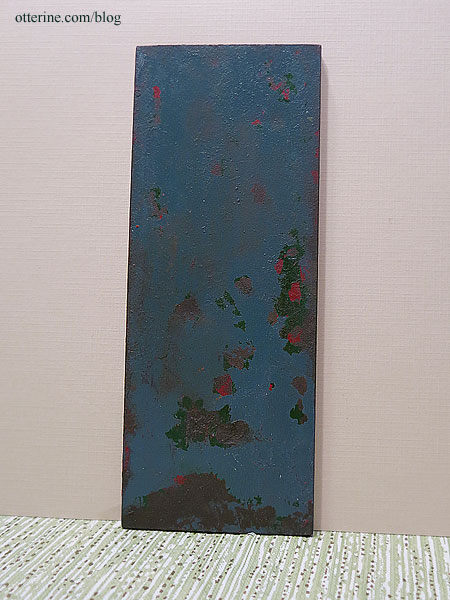
I went with Rust-Oleum Deep Forest for the interior. I masked very little on the interior after the third paint coat since it would have been more protected from the elements but still subject to wear and tear.
The bottom gets the most abuse from perhaps being kicked closed or ramming into things inadvertently left in its path over the years.
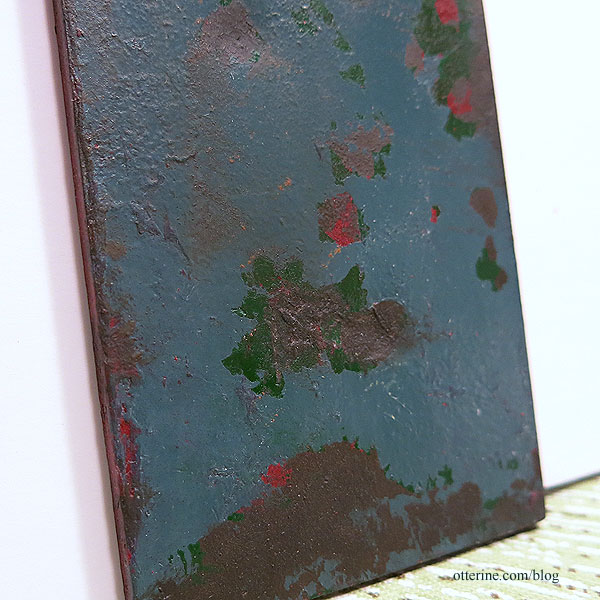
Spray paints have recommendations such as applying second coats within 2 hours or waiting for 48 hours to prevent crazing (wrinkling). Since I was within that “don’t spray” time, I achieved some crazing. Often when I try to get crazing, I can’t, and when I want a pristine finish, I get crazing. At least it worked as intended this time.
Now to build a frame….
Categories: Bert's Depot
August 16, 2020 | 0 commentsBullet holes in miniature
I thought an old garage door could use a busted window pane, so I drew a bullet hole freehand with an X-Acto blade.
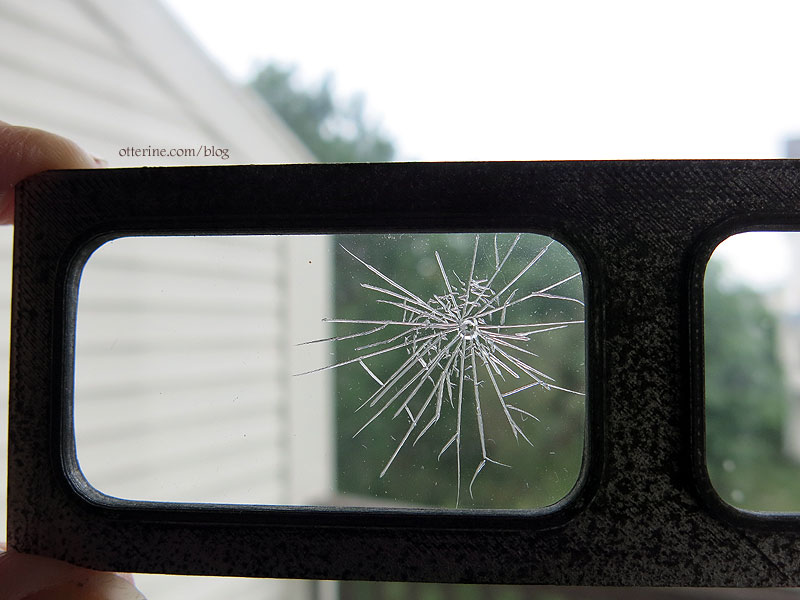
I was rather pleased with how it turned out.
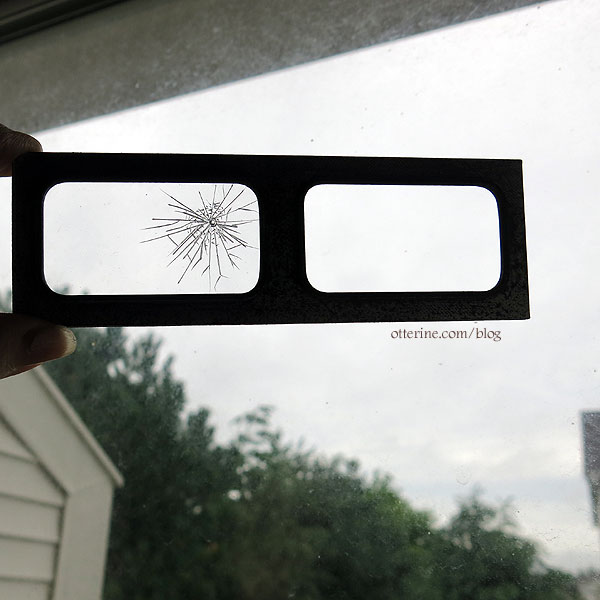
Just one hole in the window and one on the center of the panel. I didn’t want the garage to have been used as target practice. :D
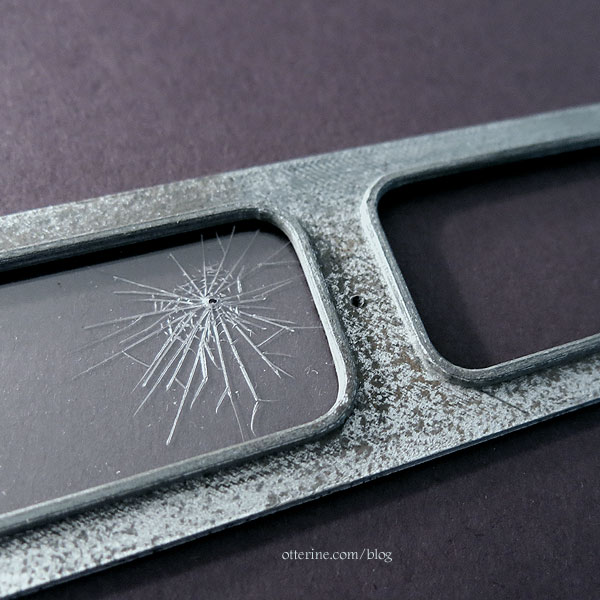
Before installing the pane, I did some aging with spray painting, barely catching them with over spray to simulate dirt.
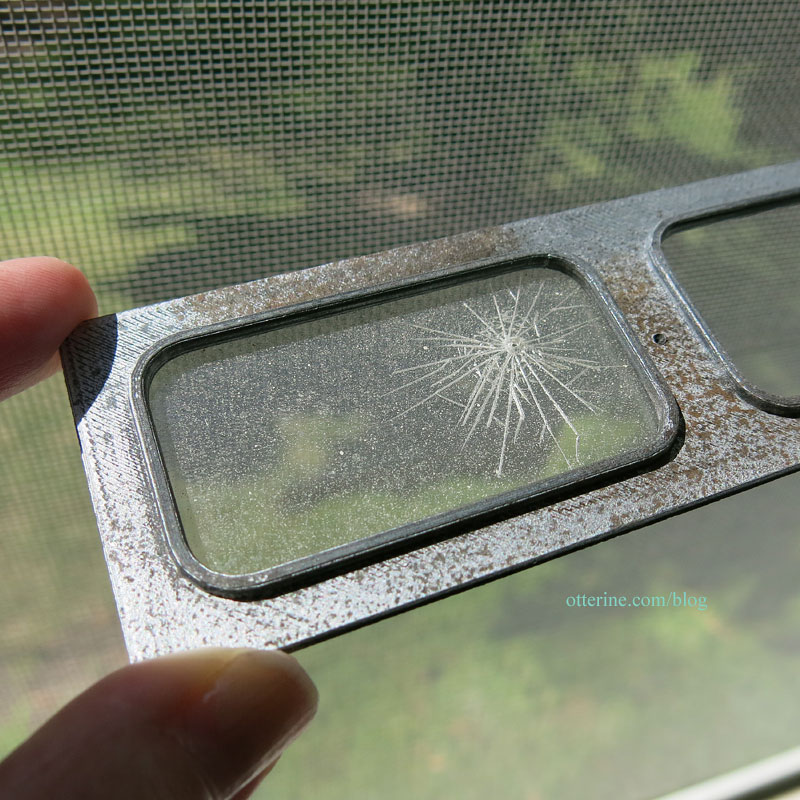
Categories: Bert's Depot
August 8, 2020 | 0 commentsGlass block window
I’ve started making a glass block window, and I am very pleased with the progress so far.

It looks like real glass.
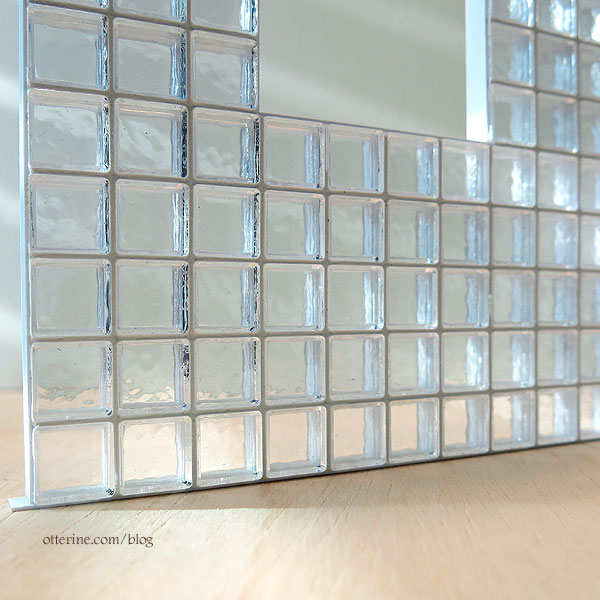
The surface is wavy like the real deal, too.

Next up will be figuring out an approximation of a hopper vent (the tiny window insert that allows for airflow). :D

I originally wanted a working hopper vent for the window, but in the interest of saving time, I opted to make a solid window for the middle. I could have filled in the space with more glass blocks, but I like the break in the pattern the window provides. I built the window from styrene sheet, styrene rod and rippled water sheet.
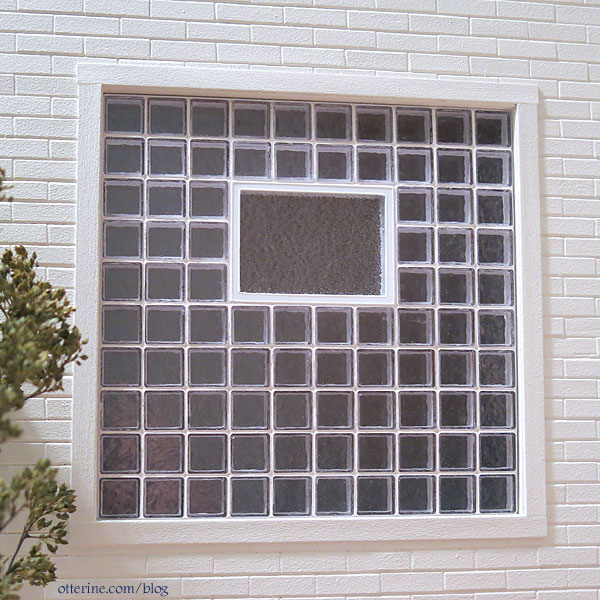
As you know, I freely share nearly every process when I make things with very few exceptions. This process is one of those exceptions, so there is no tutorial or materials list at this time.
Categories: Whinnie's Terrace
July 8, 2020 | 0 commentsQuarenteeny Art Show Competition
The Quarenteeny Art Show Competition hosted by tiny art show is on!
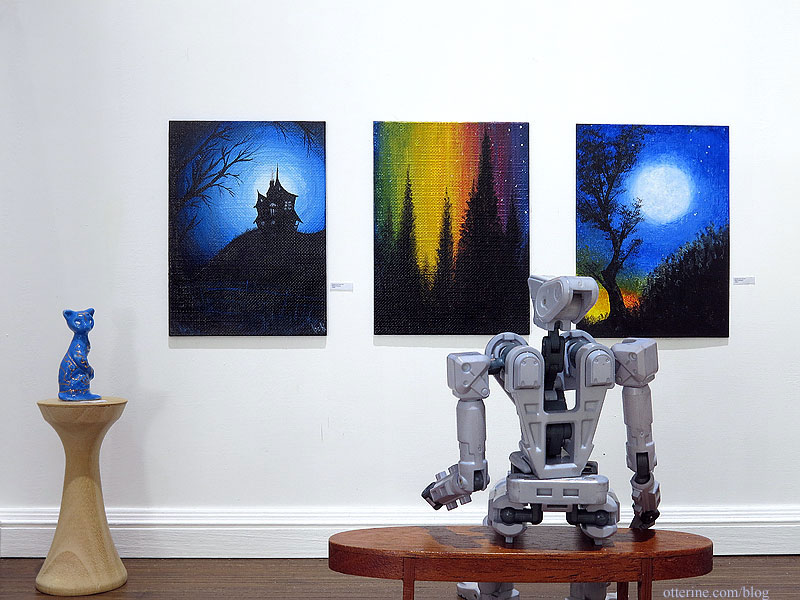
Interestingly, art shows look the same in the future, only the patrons have changed.
———-
Turned wood stand by Bill; bench by minisx2; cat from HBS. I painted the tiny art by taking mini canvases to Paint Nite events.Categories: Art and paintings, Droids and Robots
April 18, 2020 | 0 comments


NOTE: All content on otterine.com is copyrighted and may not be reproduced in part or in whole. It takes a lot of time and effort to write and photograph for my blog. Please ask permission before reproducing any of my content. Please click for copyright notice and Pinterest use.